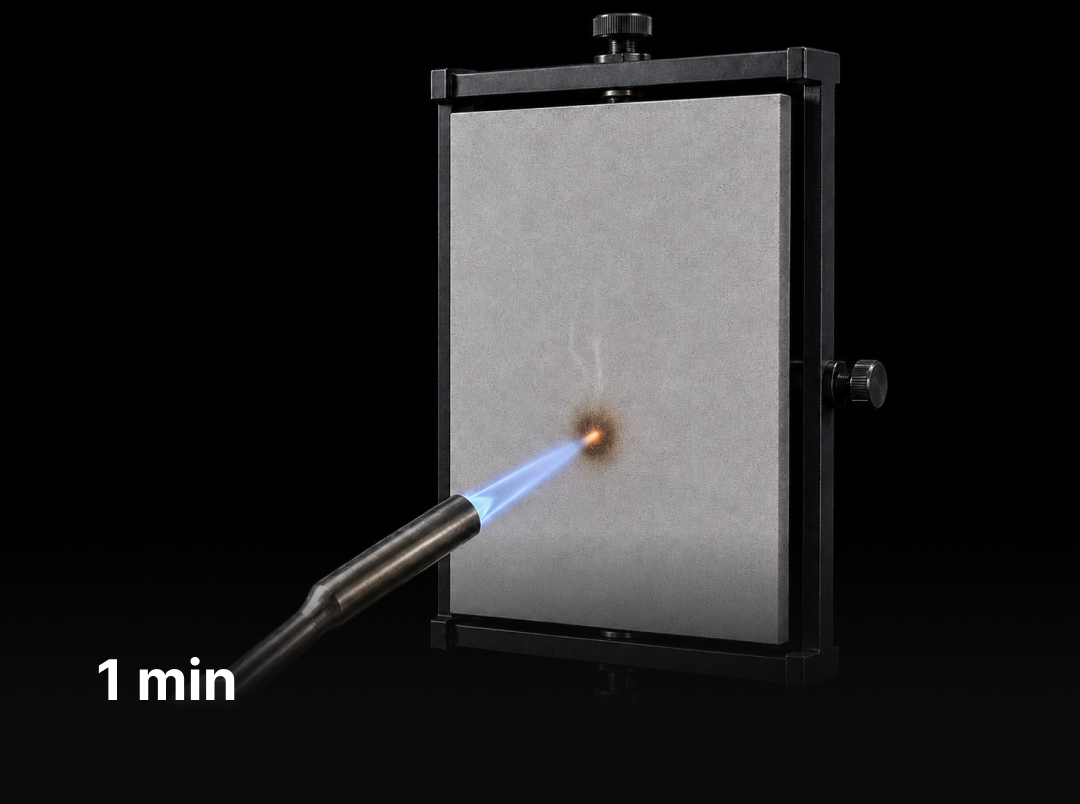
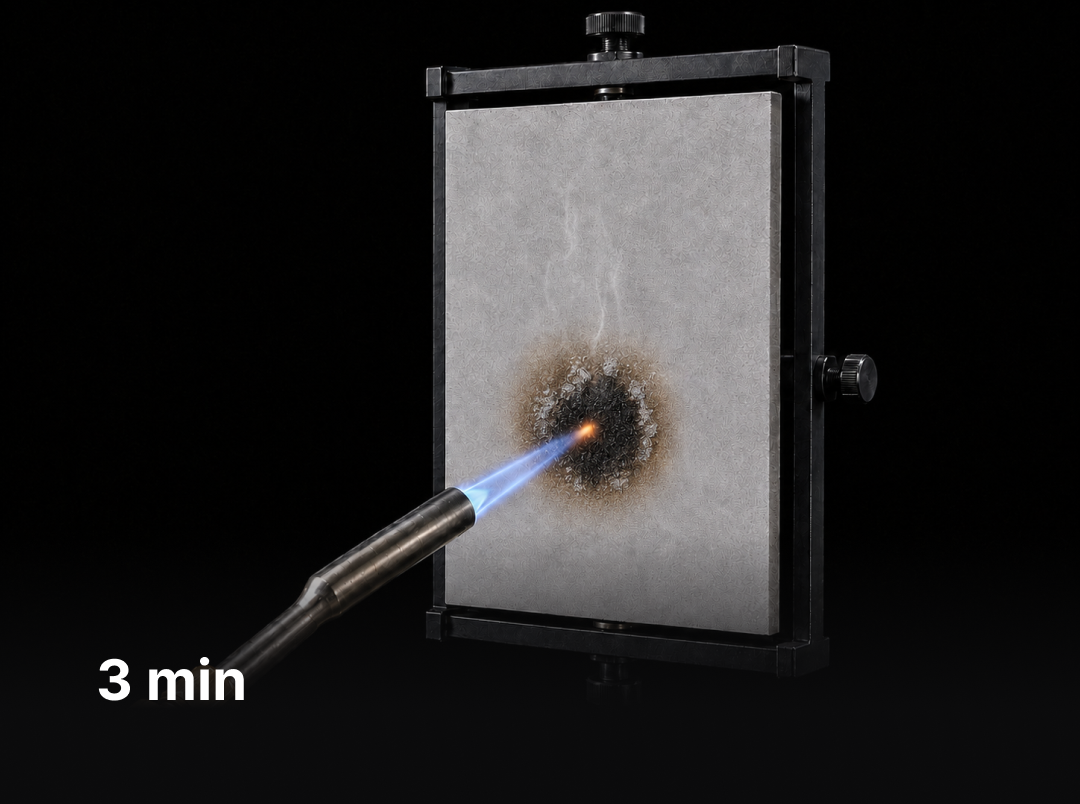
Akusta passive fire protection material
TECHNOLOGY

The Science Behind Akusta Materials

Akusta utilizes an endothermic mineral reaction. When exposed to heat, it absorbs thermal energy and releases cooling water vapor. This significantly delays heat transfer, protecting the material or structure behind it.

Technology

How Akusta Works

Endothermic mineral technology creates a protective barrier and helps delay fire.

Heat in~270 °CCoolingStable
Heat Exposure
01.

Heat Exposure

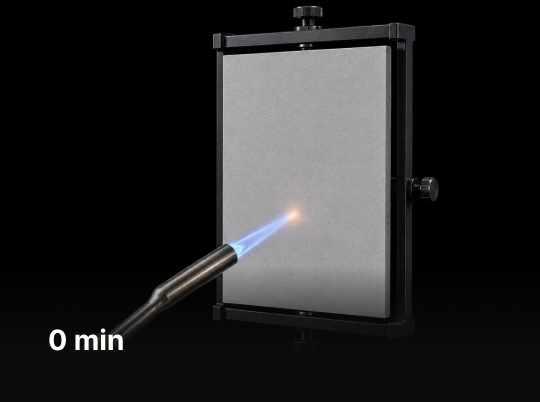
Flame contact transfers heat into the material surface.

Endothermic Reaction
02.

Endothermic Reaction

At approximately 180-200 C the mateiral absorbs heat and releases cooling water vapour

Heat penetration delayed
03.

Heat penetration delayed

Water vapour cools the material heat transfer significantly delayed

Mineral Residue
04.

Mineral Residue

After teh reacton, a layer of grey mineral dust remains

CHEMICAL REACTION

Endothermic Decomposition

Chemical reaction
2Al(OH)3 Al2O3 + 3H2O
Aluminium HydroxideAluminium OxideWater Vapour
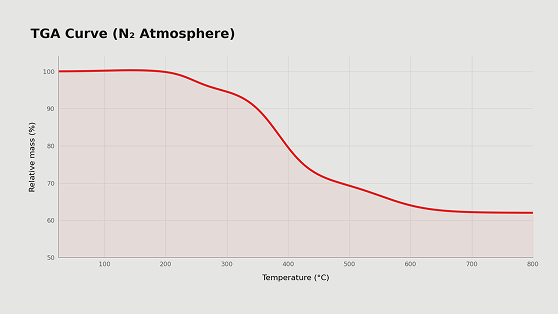
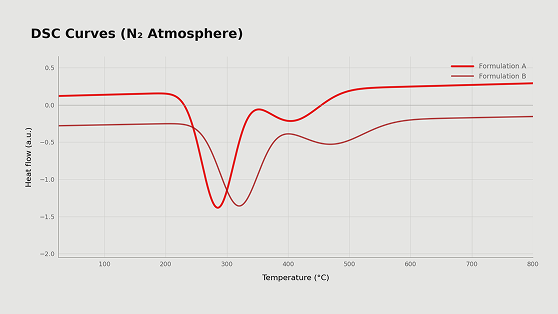
Thermal analysis (TGA)
Onset decomposition200 °C
Heat absorption1,060 J/g
Residue at 800 °C> 25 %
THERMAL ANALYSIS

Thermal Analysis (DSC / TGA)

Thermogravimetric (TGA) and Differential Scanning Calorimetry (DSC) confirm the high thermal stability and heat absorption of Akusta formulations.
MATERIAL PROPERTIES

Material Properties

Property
Unit
Soft Type (ATH 70S)
Hard Type (ATH 60H)
Specific Gravity
-
1.679
1.535
Tensile Strength
MPa
4
5.7
Tensile Modulus
MPa
64
1,090
Flexural Strength
MPa
2.1
9.8
Flexural Modulus
MPa
70
1,080
Shore hardness
A/D
A 61
D 72
Vicat Softening Temperature
°C
47
43
Heat Deflection Temperature
°C
-
39
Flammability UL94
Rating
V-0 (2.2 & 3.2 mm)
V-0 (3.2 mm)
MATERIAL STRUCTURE

Material Structure

Polymer Matrix

Thermoplastic resin ensures processability and mechanical performance.

Mineral Filler (ATH)

High content ATH for heat absorption and vapour release.

Functional Additives

Stable oxide layer protects the substrate after exposure.
LABORATORY VERIFICATION

Tested In-House and Independently

FAQ

Frequently Asked Questions

01
What is the main fire protection mechanism?
Akusta uses an endothermic mineral reaction. When exposed to heat, the aluminium hydroxide (ATH) content decomposes at around 270 °C, absorbing large amounts of energy and releasing water vapour. This cools the material, dilutes combustible gases, and forms a stable aluminium oxide layer that protects the substrate.
02
What is the maximum service temperature?
Continuous service temperature depends on the specific grade. The Hard type (ATH 60H) offers a heat deflection temperature of around 116 °C, while the Soft type (ATH 70S) is around 89 °C. For exact values for your application, please refer to the technical data sheet.
03
Can Akusta be used in outdoor applications?
Akusta is primarily developed for technical and industrial applications. For outdoor or UV-exposed use, we recommend discussing the specific conditions with our engineering team so the right grade and any protective measures can be selected.
04
Is Akusta halogen-free?
Yes. Akusta materials are completely halogen-free. They produce low smoke and low toxicity when exposed to fire, making them suitable for enclosed and safety-critical environments.
05
Which processing methods are suitable?
Akusta can be processed using standard thermoplastic methods, including injection molding, extrusion and lamination. The Soft type is suited to sheet extrusion and thermoforming, while the Hard type is optimised for injection-molded structural components.
06
Do you provide technical data sheets?
Yes. Technical data sheets, certificates and test reports are available in our download center. Additional documentation can be provided on request for specific grades or applications.